Website for car repair garages: booking, local search and cost
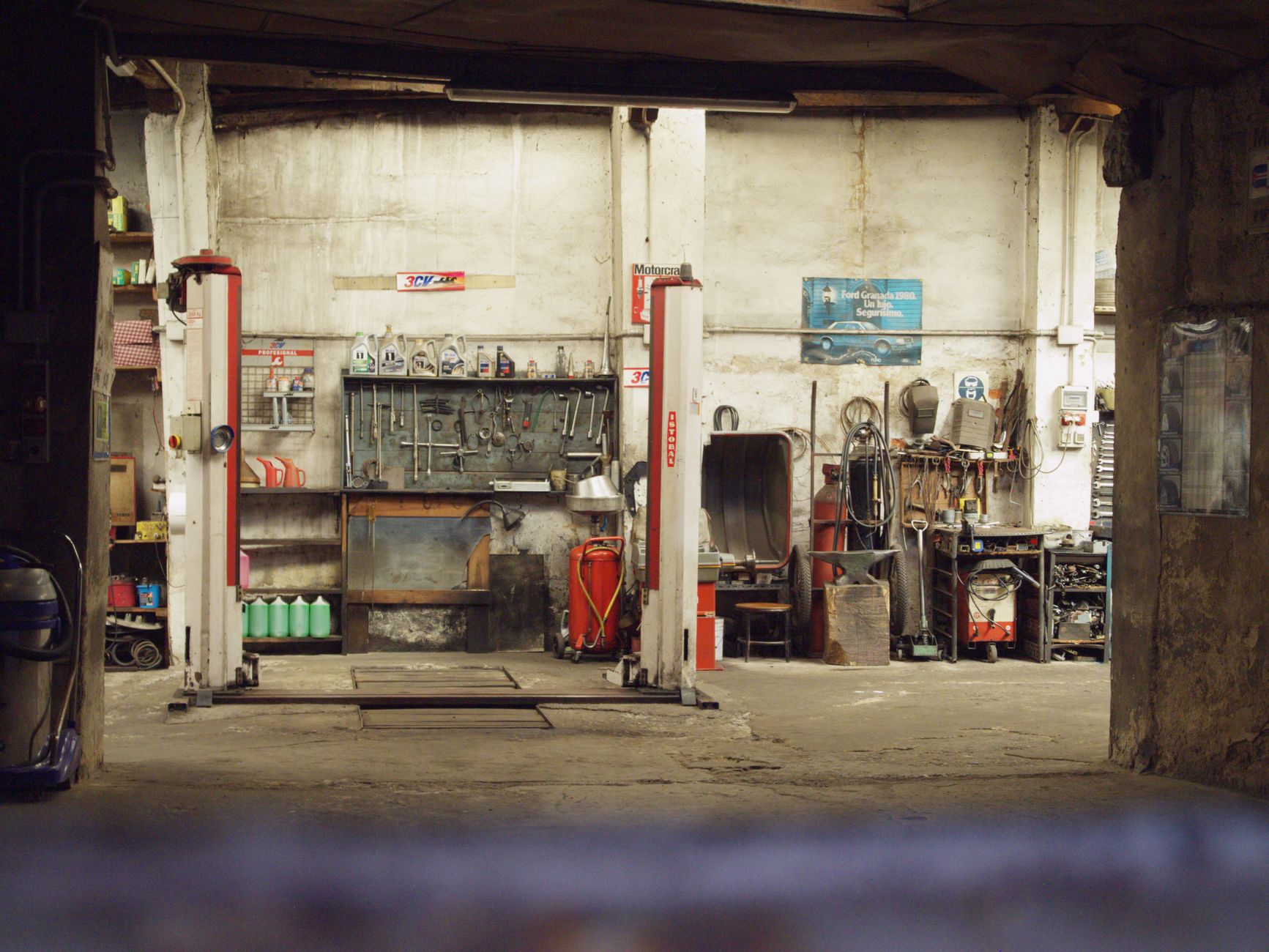
A website for a car repair garage is a step 03 business website at EUR 1.500-3.500, built in 3-6 weeks: a page per service, opening hours, a map and a booking request that lands in your inbox. If the booking has to show real free slots from your workshop planner, or take a payment, it moves to step 04 at EUR 3.500-7.500 over 6-12 weeks.
A garage that lives on phone calls can start with a step 01 landing page at EUR 600-900. Which step fits depends on what your garage software already does.
How a garage wins or loses the enquiry
A garage site has two kinds of visitor. One has a warning light on the dashboard. On a phone, that driver needs three answers fast: are you open, where are you, can I call. A phone number that is not a tappable link, or opening hours that differ from your Google Business Profile, can cost you that call.
The other visitor is planning: an APK, a service, a tyre change before winter. That driver is comparing garages, wants to see that you do the job on their car, and wants a slot without phoning during working hours. A single list of services does not answer that. A page per service does, and gives search engines a specific page to match to a specific search.
Specialisms deserve a mention too, and their own page if the scope widens: one brand, hybrid and electric cars, or vans for trade customers. A driver with that car is looking for exactly that detail.
Local search, from the ground up
A garage serves the drivers within reach of its workshop, so being found nearby is the search that matters. Three things carry it:
- Consistent details. The same business name, address, phone number and opening hours on your site, your Google Business Profile and any directory you appear in, with holiday closures updated everywhere.
- Service pages. APK and servicing, brakes and tyres, air conditioning and diagnostics, grouped so each page has a clear title, what the job involves and how to book it.
- Technical hygiene. Pages Google can index, titles that name the service and the town, and internal links between related services.
The step 03 build delivers the pages. SEO foundation, a one-off EUR 450-750, sets up Search Console and analytics, checks indexation and technical hygiene, sets titles and internal links, and gives you a 3-6 month plan. Adding service and location pages over time is SEO growth at EUR 500-800/mo. There is more in local SEO for Dutch businesses.
Booking a slot: four levels
"Online booking" can mean a form or a live planner, and the difference is a full step on the ladder. Pin it down before you compare quotes.
| What the booking does | Step | Price | Timeline |
|---|---|---|---|
| Request form with licence plate, service and preferred day, confirmed by you by phone or email | Step 03 | EUR 1.500-3.500 | 3-6 weeks |
| Your garage software's own booking widget, embedded in or linked from the site | Step 03 | EUR 1.500-3.500 | 3-6 weeks |
| Real free slots read from your workshop planner through an API, or a payment taken at booking | Step 04 | EUR 3.500-7.500 | 6-12 weeks |
| Your own workshop platform with vehicle history, invoices, approving extra work online and its own admin | Step 05 | From EUR 7.500 | After discovery |
A request form sounds basic, but when a brake job can turn into a longer repair once the car is on the lift, a person confirming the slot may be the honest option. The trade-offs are in adding a booking system.
What your garage system already covers
If you run workshop management software, it may already do part of what you are about to pay for. Ask your supplier four questions before scoping:
- Does it have an online booking page or widget that can sit on your website?
- Does it send service and APK reminders? If it does, the website does not need to.
- Does it offer an API, is access included in your subscription, and does it know real capacity per bay or mechanic?
- Can you export your customer and vehicle records?
The answers decide the build. If the software has a booking page that works, the website's job is to send drivers to it with a clear button, and you stay at step 03. If it has an API and you want the slots on your own site, that integration is step 04. A licence plate lookup that fills in make and model from the RDW's open vehicle data is also an API integration, so it belongs with the step 04 work. If the software has neither, a request form does the job.
What moves the number
- Number of pages. Step 03 covers 4-7 pages. A garage with twelve services either groups them or widens the scope.
- Photos. Your own workshop and team show a driver where their car is going, and arranging a shoot takes time on your side. See stock photos versus real photography.
- Used cars for sale. A few cars entered by hand in the CMS fit step 03. Listings pulled from a stock system through an API are step 04.
Process and timeline
- Scoping. Services, specialisms, what your software does and which booking level you need. A fixed quote follows.
- Content. Service descriptions, opening hours, photos and any prices you want to show. This is the part that waits on you.
- Design and build. Designed and built in code with Next.js, with a CMS so you can change hours and prices yourself.
- Testing. On phones first, including tap-to-call, the map and the booking flow from start to finish.
- Launch. With analytics connected, and Search Console set up when SEO foundation is part of the project.
A step 01 page takes 1-2 weeks, step 03 takes 3-6 weeks and step 04 takes 6-12 weeks. Step 05 is quoted after discovery. Every step is on the packages page.
When to spend less
If your work comes in by phone from drivers who already know you, a step 01 landing page at EUR 600-900 may be enough: services, hours, map, a call button, a form and analytics, live in 1-2 weeks.
If your garage software already has a booking page that works, link to it instead of paying for a step 04 integration that shows the same slots in a different colour.
If you have a decent site that does not show up locally, try SEO foundation at EUR 450-750 before rebuilding. And fix wrong hours on your Google Business Profile first, since the profile itself is free. In each of these cases, do not buy a bigger build yet.
Questions before you get a quote
Can the website show my real free slots?
Only if your workshop software offers an API that exposes them, and connecting to it is step 04 at EUR 3.500-7.500. If it does not, a step 03 request form where you confirm the slot is the reliable alternative. Scoping settles which applies before a price is fixed.
Should I put prices on the site?
That is your decision, and the CMS lets you change them yourself. A job with a set price, such as an APK, can show one. Repairs that depend on what the diagnosis finds are better handled with a request form than with a number you might have to walk back.
Do I need a page for every town nearby?
Only for places you really serve and can say something specific about, such as a pick-up service or a second workshop. Copies of one page with the town name swapped tell a driver nothing new. Building service and location pages over time is what SEO growth at EUR 500-800/mo covers.
Who owns the website?
The client owns the code, the repository and the database. The studio can host the site, agreed per project. After launch, Care at EUR 100-300/mo covers updates, monitoring, backups and small fixes, not new features or a redesign.
Tell us about your workshop and the software you run, and we will tell you which step fits: get in touch.
Building something?
JP Studio designs and builds websites, storefronts and product interfaces.