Website for physiotherapists: cost, referrals and appointments
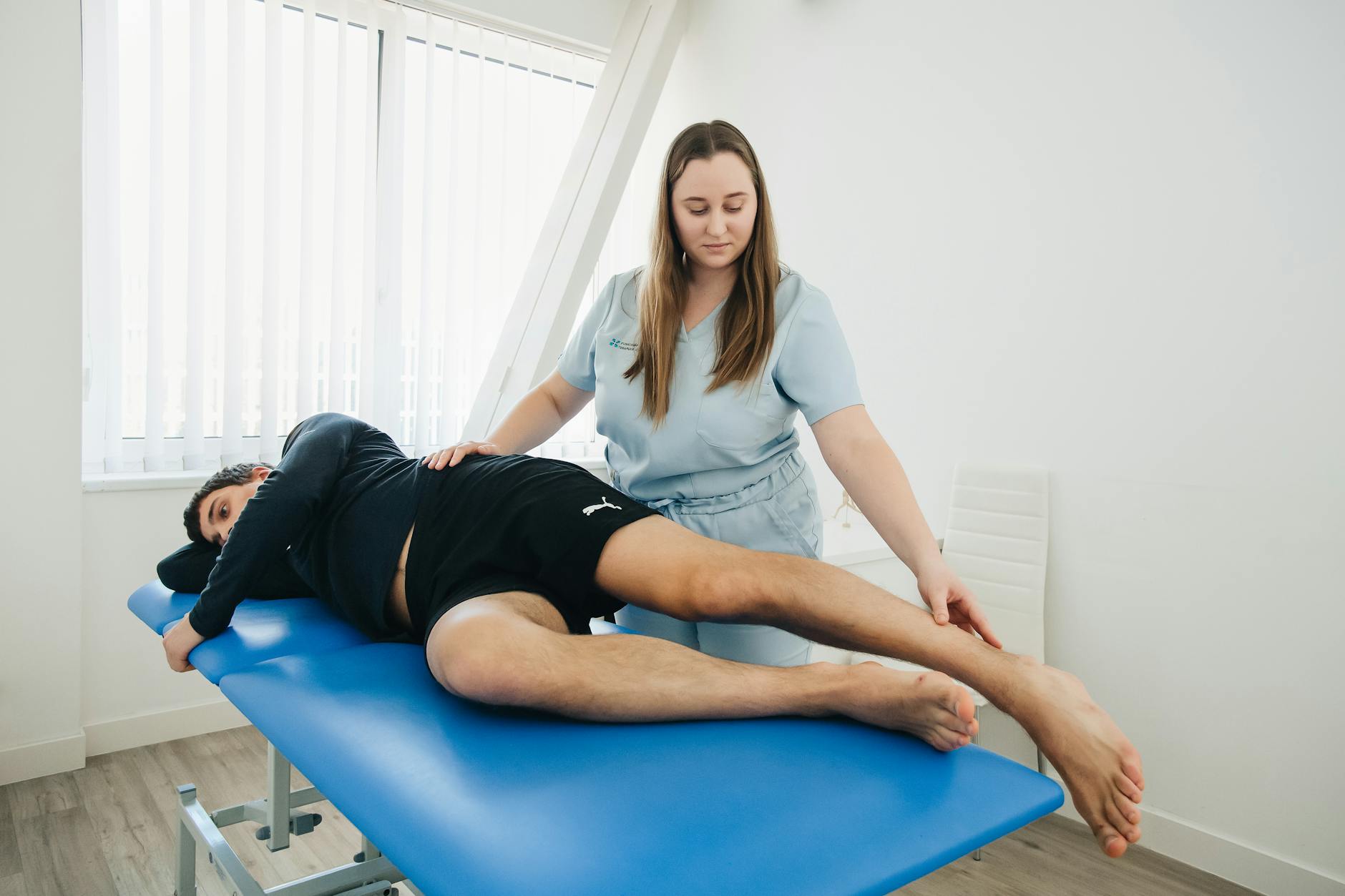
A physiotherapy practice with pages for its treatments, profiles for its therapists, information for referrers and online appointments needs step 03, a business website at EUR 1.500 to 3.500, built in 3 to 6 weeks. A solo therapist can start at step 01 at EUR 600 to 900 or step 02 at EUR 900 to 1.500, while a patient login, availability read from your practice software through an API, or payment at booking make it step 04 at EUR 3.500 to 7.500.
A physio site has two readers: a patient deciding whether to come, and a professional deciding whether to send someone. Both arrive with questions your front desk otherwise answers by phone.
Where a practice wins or loses a new patient
Someone in pain wants to know four things: whether you treat their problem, whether they can come without a referral, whether it is covered, and when they can be seen. A site that hides those answers asks them to phone during opening hours, and if the line is busy, the next practice is one search result away.
A referrer has a different question: what you specialise in, and how to send someone to you. A GP, a sports club or an occupational health service should find that on its own page, not in a line on the patient homepage.
What the site needs to carry
Pages built around complaints
Write each treatment page around a problem as a patient would describe it: a knee after surgery, a running injury, back pain from desk work. Methods such as manual therapy or dry needling belong on those pages as part of the answer, not as the headline. Describe what the first appointment involves, and leave out promises about outcomes.
Therapists and specialisations
Specialisations such as sports, pelvic floor or paediatric physiotherapy decide who a patient should see. A profile per therapist with their specialisations, registrations and working days lets a patient choose the right person before booking.
Referral and insurance, answered plainly
Whether a patient needs a referral, and whether treatment is covered, depends on where you practise and on their own policy. The site cannot promise cover, but it can state what applies at your practice: whether you see patients without a referral, which insurers you have agreements with if that applies, and what a session costs when it is not covered.
A page for referrers
Who you treat, which specialisations you offer, how to refer and what to include. Keep medical details out of an ordinary contact form. Health data is special category data under the GDPR, so a referral carrying it belongs in a secure channel. GDPR and your website covers the wider rules.
Appointments and access
Beside the booking button, say how long a first appointment lasts, what to wear and bring, whether there are stairs at the entrance and where to park. A patient with a knee injury needs to know about the stairs before arriving.
What moves the quote
- How appointments connect. A link to your practice software's own booking page, if it has one, works at any step. A booking flow on the site is step 03. Availability read from your practice software through an API, or payment at booking, is step 04. Adding a booking system sets out the options.
- Treatment pages. Step 03 covers 4 to 7 pages and each extra simple page is an add-on at EUR 150 to 250, so keep a long list of complaints to those that earn a page of their own.
- Locations. A practice at more than one address needs a page per location with its own hours, team and directions.
- Patient accounts. A patient login for exercise sheets or documents is step 04, as building a client portal explains. So is a full patient dashboard, where programmes and progress are managed.
Which step fits which practice
The full ladder is on the packages page. For a physiotherapy practice it maps like this.
| Step | Price | Timeline | What it looks like for a practice |
|---|---|---|---|
| 01 Single-page landing | EUR 600-900 | 1-2 weeks | A solo therapist: what you treat, who you are, where to find you, a form or booking link |
| 02 Mini-site | EUR 900-1.500 | 2-3 weeks | Treatment and practice pages, a contact flow, updates in a basic CMS |
| 03 Business website | EUR 1.500-3.500 | 3-6 weeks | Treatment pages by complaint, therapist profiles, a referrer page, insurance information, booking or contact |
| 04 Advanced site / web app | EUR 3.500-7.500 | 6-12 weeks | Patient login, availability read through an API, payment at booking or by subscription, intake sent to your practice software through an API |
| 05 Custom SaaS platform | from EUR 7.500 | After discovery | Exercise platform with its own workflows and admin |
Process and timeline
- Scoping. Which complaints and therapists get pages, what the referral and insurance pages say, and how appointments connect. A fixed quote follows.
- Content. Treatment text, profiles, practice photos, insurance and referral information. A therapist should check every treatment page, and that is the part that waits on you.
- Design. Structure, templates and the path to an appointment, treated as one job under design and engineering.
- Build. Pages, CMS, forms and the booking connection.
- Testing. Every form and booking route tried on phone and desktop.
- Launch and handover. Your team gets CMS access to update treatments, profiles and prices.
Step 01 runs 1 to 2 weeks, step 02 runs 2 to 3 weeks, step 03 runs 3 to 6 weeks and step 04 runs 6 to 12 weeks. Where yours lands depends on when checked text arrives.
Ownership, care and search
You own the code, the repository and the database. We can host the site too, and that is agreed per project. Care at EUR 100 to 300 per month covers updates, monitoring, backups and small fixes, not a redesign or new features.
SEO foundation is a one-off EUR 450 to 750 for Search Console, analytics, indexation, technical hygiene, titles, internal links and a 3 to 6 month plan. SEO growth at EUR 500 to 800 per month carries that plan out, including service and location pages. If patients look for a physiotherapist by town or neighbourhood, location pages are where that monthly work goes.
When to spend less
If your diary is full through referrals from local GPs and sports clubs, the site mainly confirms you exist and says how to reach you. Step 01 at EUR 600 to 900 covers that, and a larger site will not create room in a full diary.
If your practice software already has a booking page, do not buy a step 04 API integration to get online booking. Link to it from a step 02 or 03 site.
And if the treatment and insurance text is not written yet, a bigger site only shows the gaps. Write it first, then build.
Questions about a physiotherapy website
Can patients fill in an intake form online before the first visit?
They can, but it carries health data, so it should not arrive as an ordinary form email. An intake sent securely into your practice software through an API is step 04. If your practice software offers its own intake form, linking to it keeps the site simpler.
Should we put session prices on the site?
A patient whose treatment is not covered needs the price before booking, and a page that shows it saves a phone call. A short table of session types and prices is enough. Check whether rules where you practise require prices to be published.
Do we need a patient portal?
Only if patients should log in to your website for something they cannot get elsewhere. A login for exercise sheets or documents is step 04. If your practice software or an exercise app already gives patients that, a portal duplicates it.
Who keeps treatment pages and therapist profiles current?
Your team, in the CMS, without a developer, so the profiles change when the team does. Care keeps the site itself maintained.
Tell us your treatments, your therapists and how appointments are booked now, and we will scope it and quote a fixed price. Start here.
Building something?
JP Studio designs and builds websites, storefronts and product interfaces.