Website for Chiropractors: What It Costs and What It Has to Do
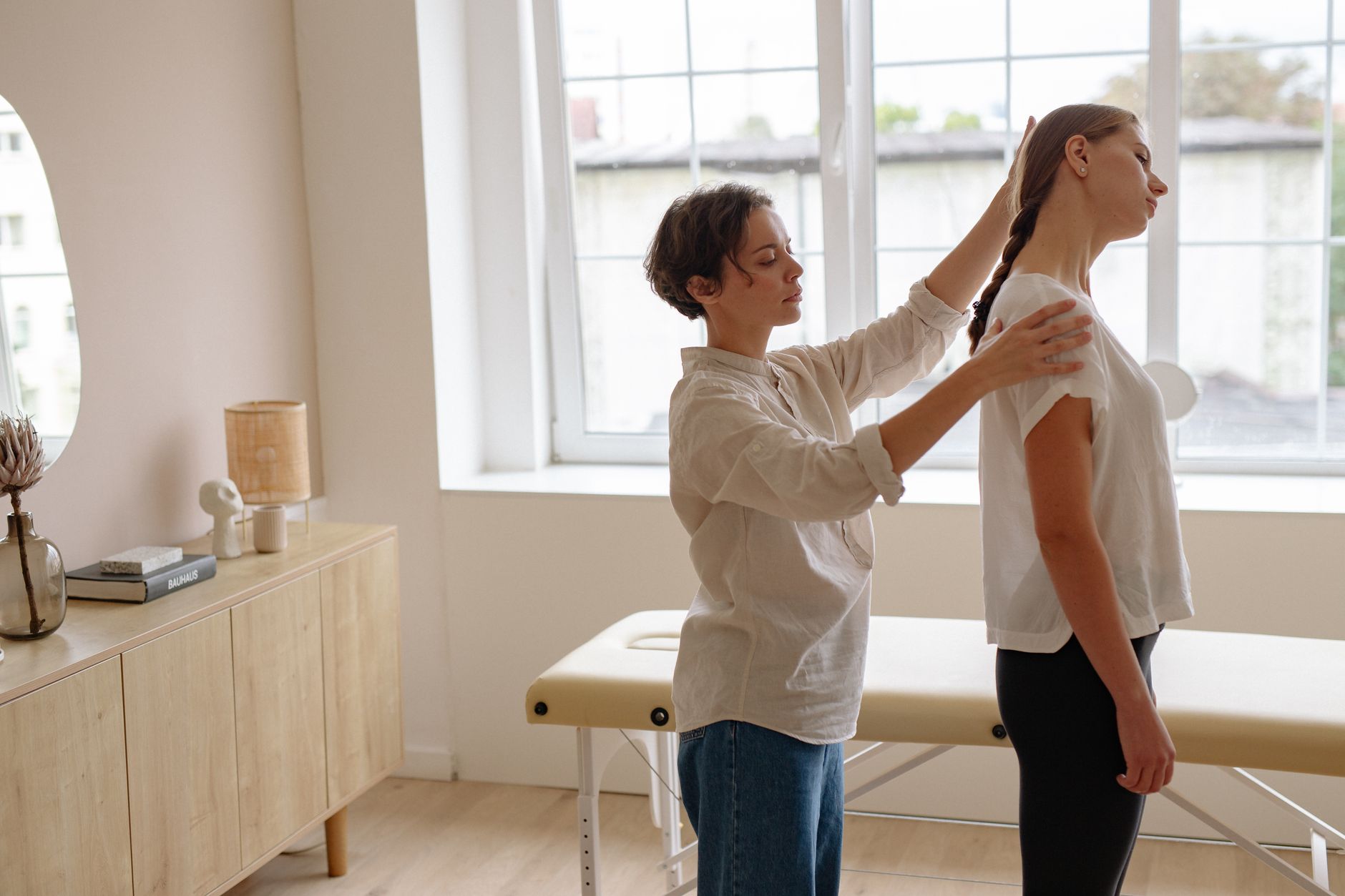
A chiropractic clinic website is a step 03 build: EUR 1.500 to 3.500, delivered in 3 to 6 weeks. That covers 4 to 7 pages, a CMS you can edit without calling anyone, a page for each treatment you offer, and a booking route that puts a real name, a complaint and a preferred time in front of you.
The range is wide because one treatment room and a five-practitioner clinic are not the same build. Here is what sits behind the number, what moves it inside the range, and where the cheaper answer is the honest one.
What a step 03 clinic site contains
- A home page that says what you treat, where you are and how to book, in that order.
- A page for each treatment, written in plain language rather than clinical shorthand.
- A practitioner page with names, registrations and a photograph of each person.
- A practical page: address, parking, nearest stop, stairs or lift, and what a first appointment involves.
- Prices, or a clear explanation of what the price depends on.
- A booking route that works on a phone held in one hand.
- A CMS, so opening hours, holiday closures and prices are yours to change.
The step covers 4 to 7 pages, and a clinic with two or three treatments sits comfortably inside that. Every step is set out on packages.
What moves the price inside the range
How many treatments get their own page
Each treatment page is a separate piece of writing, a separate line in the menu and a separate target in search, so three of them and eleven of them are not the same job. If three treatments bring the work you want more of, write those three properly and let the rest live as a list on one page.
Where the booking ends up
This is the largest single swing in a clinic build, so it gets its own section below.
How much of the content already exists
If you can hand over treatment descriptions, bios and photographs, the build is a build. If the writing happens here too, it is writing plus a build and the figure moves toward the top of the range. Neither is wrong, it just needs saying at the start.
The booking decision
There are three honest answers and they cost different amounts.
- Connect the booking you already pay for. If your practice software offers an embed or a booking link, the site hands people to it and the diary stays the single source of truth. Cheapest route, and it stays inside step 03.
- A request form. Name, phone number, the complaint in one line, two preferred windows. It reaches your inbox and a record you can sort, and you confirm by phone. Also step 03, and it suits a clinic that wants to speak to a new patient before the slot is fixed.
- Booking built into the site itself, with practitioner calendars, patient accounts, reminders and self-service rescheduling. That is a login, a database and an integration, which puts it in step 04 at EUR 3.500 to 7.500. Card payment for a block of sessions belongs there too.
Option three earns its price when the diary is the product, with several practitioners in several rooms and patients moving their own appointments at night. Otherwise option one or two is not a compromise, it is the correct answer.
Treatment pages carry the local search
Someone with a locked neck on a Tuesday morning does not search for your clinic name. They search for the complaint and the neighbourhood. A page that names the complaint, explains what a first session involves, what it costs and how long it takes, then offers the booking route, can answer that search. A home page carrying every treatment in one paragraph cannot.
Three things make those pages findable rather than merely present.
- One page, one subject, with the subject in the title, the first sentence and the address of the page.
- Address, opening hours and phone number in machine-readable form, so the map listing and the site agree.
- Internal links from the treatment pages to the practical page, so a visitor reading about a first session reaches the parking and the price without going back to the menu.
That groundwork is a one-off SEO foundation at EUR 450 to 750: Search Console, analytics, indexation, technical hygiene, titles, internal links and a plan for the next 3 to 6 months. It is done once. Publishing new complaint and location pages month after month is SEO growth at EUR 500 to 800 per month, a separate decision after launch.
A worked example: two practitioners, three treatments
| Page | What it does | Why it exists |
|---|---|---|
| Home | What you treat, where you are, how to book | Visitors arrive knowing nothing about you |
| Treatment page 1, 2 and 3 | The complaint, the session, the duration, the price | These are the pages a complaint search can land on |
| Practitioners | Names, registrations, photographs | A new patient is choosing a person, not a logo |
| First visit and practical | Address, parking, stairs, what to bring | Removes the reasons a booking gets postponed |
| Contact and booking | Request form, or the link to your diary software | One route, repeated on every page |
Seven pages, step 03, landing in the upper half of EUR 1.500 to 3.500 because three treatment pages means three pieces of writing rather than one.
Process and timeline
- Scoping. The page list, the booking route and who writes what. A fixed quote follows scoping, never before it.
- Design. Home and one treatment page first, because once those two are right the rest follow the pattern.
- Build. Pages, CMS fields, forms, the booking connection, checked on a real phone.
- Content and review. Your text and photographs go in, you read it as a patient would, we correct.
- Launch. Redirects from old addresses, Search Console and analytics connected, map listing checked against the site.
3 to 6 weeks end to end for step 03. The photographs and the yes on treatment text are the part that waits on you. How the stages run is on design and engineering.
When to spend less
- One practitioner, one address, one treatment, opening soon. A step 01 single page at EUR 600 to 900 takes enquiries in 1 to 2 weeks while you learn what people ask for.
- Your site is fine and nobody finds it. Do the SEO foundation at EUR 450 to 750 first. Rebuilding a site nobody visits does not change why nobody visits it.
- Two or three pages and a contact flow, with no treatment library behind it. That is step 02, EUR 900 to 1.500, in 2 to 3 weeks.
Care at EUR 100 to 300 per month covers updates, monitoring, backups and small fixes. It does not cover a redesign or new features, which is better known now than later.
Common questions
Do I own the site?
Yes. You own the code, the repository and the database. Hosting is agreed per project, so it is settled during scoping rather than assumed, and the code is yours regardless of where it is hosted.
Can I add a treatment page myself later?
Yes. That is what the CMS is for: new treatment, new page, same layout, no invoice. If you want it written and aimed at search as well, that is SEO work rather than build work.
What about taking payment for a block of sessions?
Payments and checkout move a project into step 04 at EUR 3.500 to 7.500, because a payment needs accounts, records and a way to handle refunds. If it is not needed at launch, leave it out and decide once bookings are running.
Can you work with my existing booking system?
If it offers an embed, a link or an API, yes, and that is the cheapest path. Bring its name to scoping so it sits in the quote instead of arriving as a surprise. The stack we build on is on our Next.js development page.
Send the treatments you want to be found for and the name of your booking software, and you get a fixed quote with the page list attached. Start at the contact form.
Building something?
JP Studio designs and builds websites, storefronts and product interfaces.