Website for furniture makers: what it costs and what to build
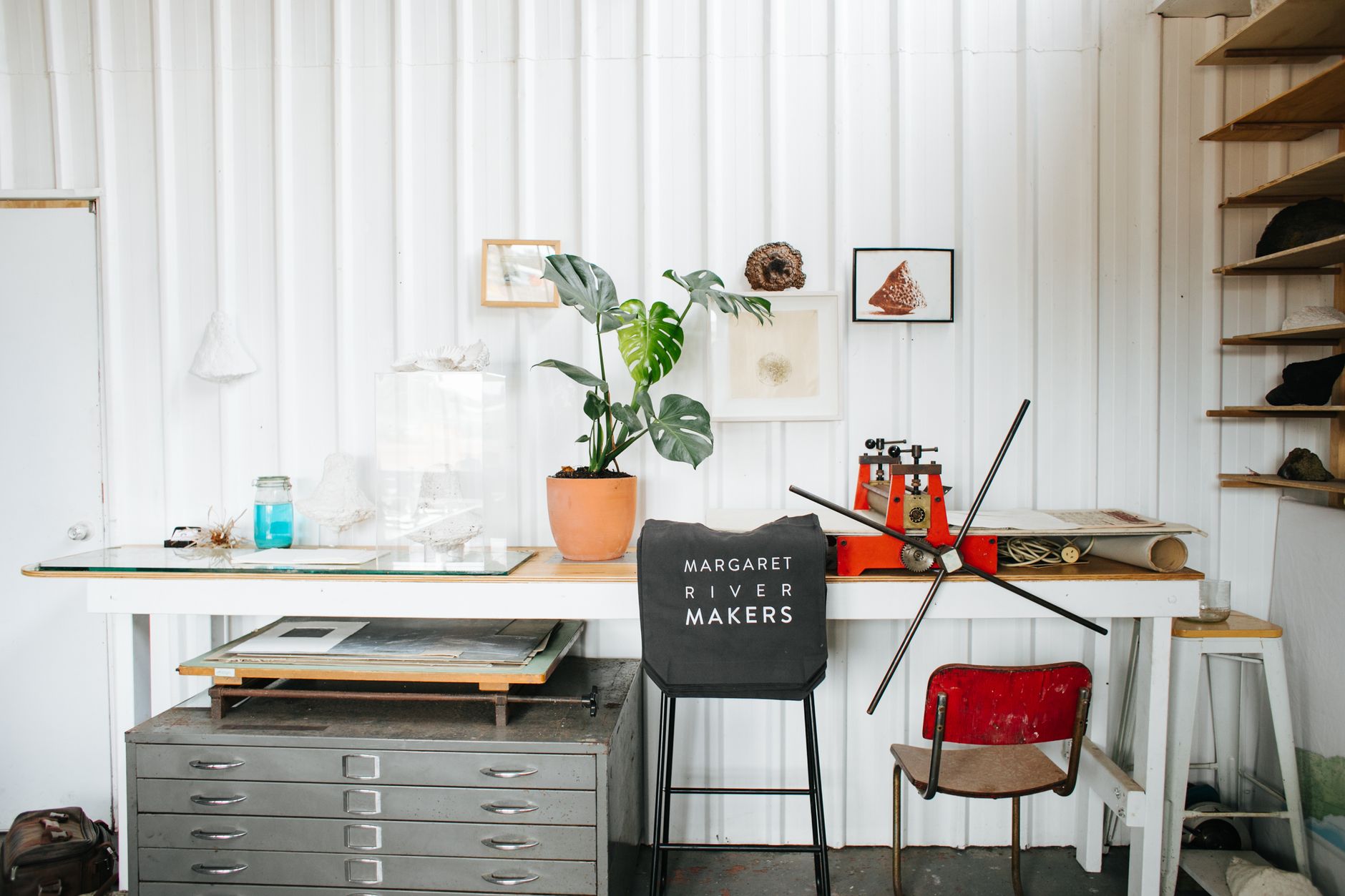
A website for a furniture maker is a step 02 mini-site at EUR 900 to EUR 1.500, or a step 03 business website at EUR 1.500 to EUR 3.500. Which one you need depends less on the page count than on the image set.
You sell one-off work. Nobody commissions a dining table from a thumbnail, so the photographs have to carry the whole argument, and photographs that carry an argument are large files. Serving them properly is engineering work, and it is the part of the quote that moves.
What the site is actually for
It is not a shop. A commission starts as a conversation: someone has a room, a rough idea, a timber they like the look of, and no sense of what it costs. The site has two jobs and both are narrow.
- Show finished work in enough detail that a serious enquirer stops mentally comparing you to a showroom.
- Collect an enquiry good enough to answer properly the first time.
The second job is the one that gets skipped in favour of printing an email address. An enquiry form that asks the right things is worth building.
- What the piece is, and the room it goes in
- Rough dimensions, even if they are guesses
- Timber or finish, if they have a preference
- A photo of the space
- A budget range they are willing to say out loud
- When they want it
The budget question is the one makers hate putting on a form. It is also the one that lets your first reply be useful instead of a request for more information. A photo upload field is worth having too, and it sits comfortably inside a step 03 contact flow.
Why image weight is the budget
A gallery of workshop and finished-piece photography is the heaviest thing on a small site, and it gets opened on a phone. The work that keeps it fast is unglamorous, and it is a real part of what you are paying for.
- Original camera files never reach the page. The site serves generated sizes, one per breakpoint.
- Modern image formats with a fallback, so an older browser still gets a picture.
- Width and height set on every image, so the layout does not jump while it loads.
- Images further down the page load only when they are about to be seen.
- Crops chosen per photograph, rather than one aspect ratio forced across the whole set.
- An upload path in the CMS that resizes what you give it, so a full-resolution phone photo cannot land on the home page at full weight.
Do that and a large gallery stays fast. Skip it and no amount of design rescues the page on a phone.
One thing we do not quote here is the photography itself. If you already have a usable set, the numbers below are the numbers. If you do not, that is a separate cost and a separate calendar, and it is worth sorting out before the build rather than during it.
What each step buys a furniture maker
| Step | Price | What it covers here | Timeline |
|---|---|---|---|
| 01 Single-page landing | EUR 600 to 900 | One page: the work, the process, an enquiry form, analytics, responsive | 1 to 2 weeks |
| 02 Mini-site | EUR 900 to 1.500 | 2 to 3 pages, contact flow, basic CMS so you can add a finished piece yourself | 2 to 3 weeks |
| 03 Business website | EUR 1.500 to 3.500 | 4 to 7 pages, CMS, separate pages for commissions, restoration or trade work, booking or contact | 3 to 6 weeks |
| 04 Advanced site or web app | EUR 3.500 to 7.500 | Login, dashboard, API, CRM, payments, chatbot. A client area for a commission in progress, or selling stock pieces | 6 to 12 weeks |
| 05 Custom SaaS platform | from EUR 7.500 | Scope, auth, billing, admin, deployment | After discovery |
Selling finished pieces, or taking a deposit against a commission, is step 04. Payment brings refunds, delivery terms, tax handling and a support load with it, and folding that into a step 03 quote would misrepresent what you were buying. The full ladder, without the furniture framing, is on packages.
Process and timeline
Scoping first: how many pieces you want to show, whether you add them yourself, whether there is restoration or trade work that deserves its own page. A fixed quote always follows scoping.
Then build, in the week ranges above. A mini-site is 2 to 3 weeks, a business website 3 to 6 weeks, anything with a login or an integration 6 to 12 weeks. We design and engineer in the same pass rather than handing drawings over a wall, which is the working method described on design and engineering.
This is the part that waits on you: the photographs. The build cannot finish ahead of the pictures, and launching with placeholders means committing to a second round of work later. Decide early which pieces are in the set, and get them shot.
When to spend less
If you have a strong set of photographs and a phone you actually answer, step 01 at EUR 600 to EUR 900 is a real answer. One page, the work, the process, a form. It will beat a larger site built around images you are not proud of.
Skip the structured project CMS that step 03 brings if logging in to add a piece is more friction than emailing us the files. Step 02's basic CMS still covers simple text edits, and choosing it saves you money on the build.
Skip SEO growth at EUR 500 to EUR 800 a month until the foundation is in. SEO foundation is EUR 450 to EUR 750 and it is a one-off: Search Console, analytics, indexation, technical hygiene, titles, internal links, and a plan for the next three to six months. It is the first piece of work, not a cheaper version of the monthly one.
Care is EUR 100 to EUR 300 a month for updates, monitoring, backups and small fixes. It does not cover a redesign and it does not cover new features. If you are comfortable leaving the site alone between jobs, you do not need it from day one.
Questions makers ask
Our photographs are phone snaps. Should we launch anyway?
Launch a single page at EUR 600 to EUR 900 with your best few images, then expand once you have a proper set: an extra page is an add-on at EUR 150 to EUR 250, confirmed by the quote. What you should not do is buy a step 03 site designed around large photography and then fill it with images that undersell the joinery. The site is a frame for the work, and a frame around weak pictures makes the work look weaker.
Can customers buy from the site?
Stock pieces, yes, but that is step 04 at EUR 3.500 to EUR 7.500, because it means payments, delivery and order handling. Commissions themselves are better handled as an enquiry and a quote, since the price depends on timber, size and finish, and a checkout cannot ask those questions the way a conversation can.
Who owns the site and the code?
You do. The code, the repository and the database are yours, and you keep them whoever maintains the site afterwards. Hosting is decided per project rather than assumed, and we settle it with you during scoping.
Will the gallery be slow on a phone?
Not if the image handling in the section above is done, and it is done by default on every build we ship. If you are moving an existing site across, image weight is the first thing worth measuring. We build on Next.js, which handles a lot of this natively, and there is more on that on our page as a Next.js development agency in Amsterdam.
What does it cost to keep running?
Care is EUR 100 to EUR 300 a month if you want it maintained. Beyond that, the running costs are hosting and your domain, and hosting is part of the per-project conversation rather than a fixed line we add to every quote.
Send us the pieces you want to show and the enquiries you wish you were getting, and we will scope it and quote a fixed price. Start here.
Building something?
JP Studio designs and builds websites, storefronts and product interfaces.